From as far back as I can remember, I’ve had a deep connection with textiles. It’s as if I was born with a needle and thread in my hands. This enduring bond with fabrics led me to embark on a profound journey through the intricate world of textiles and the emotional connections they forge, especially during those early moments of our lives.
A Blanket of Comfort
Think back to the precious moments when you took your very first breath, likely swaddled in a soft, soothing blanket. It’s argued that skin-to-skin contact is essential for a newborn’s internal regulation, but have we ever considered the impact of the cloth itself? The materials enveloping us become an extension of our fragile bodies, creating physical, emotional, and psychological barriers with the world around us. Before we even recognize a mother figure to attach to, we must first survive, and it’s the cloth that helps us do just that.

As the child inhabits the cloth, the cloth is transformed. It takes on new shapes, smells, and meanings. Is there a silent dialogue between the baby and their beloved blankie? Do the colors, textures, scents, and fibers convey secrets about this new world, aiding the baby’s subtle navigation? It’s a dance between biology and environment, as fabrics shape us in the most delicate and profound ways.
Primitive Urges to Create in Cloth
My primal urges to create with cloth are unstoppable. If I go too long without turning my creative ideas into tangible textile creations, it causes me physical pain. The relationship with the act of crafting clothing is an overwhelming and, perhaps, a displaced form of love.
This exploration led me to the research of Donald Winnicott, who delved into the concept of “Transitional Objects” nearly a century ago. His work explores the use of an object, typically made of soft fabric like a teddy bear or blanket, to externalize a child’s internal world. It’s a process where an object takes the place of the mother, allowing the child to understand beings as separate from themselves. This representation of the breast, or the “object of the first relationship” as Winnicott referred to it, serves as a bridge between the child’s inner and outer worlds.

As children explore their relationship with these objects, they come to understand their imperfections in fulfilling all their needs. It’s not the object itself that is transitional, but the act of using it allows the child to transition from a state of being merged with the mother to a state of being in relation to the mother as something outside and separate. This process is a significant step in a child’s development, marking their growing independence.
Transitional Objects: Lifelong Companions
Most people eventually outgrow their need for transitional objects, but they rarely abandon them entirely. In Nixon’s book, “Much Loved,” showcasing photographs of beloved teddy bears, the majority of entries were from adults who still cherished their childhood objects. These individuals may have adjusted to life among other people, but they couldn’t let go of their stuffed animals.

I’ve come to realize that I’m not the only adult who still holds an affectionate relationship with their teddy bears. It’s a testament to the enduring power of textiles and the emotional connections they create.
Intrigued by this enduring attachment, I decided to explore this tendency to save our bears and blankets. I interviewed friends and discovered that each one had a story about at least one teddy they still thought of with love. It was more than a mere object; it was a cherished companion from their past, a silent friend who had seen them through their earliest years.
In a world that’s constantly changing, the significance of these transitional objects remains. They are not just reminders of our past; they are keepers of our memories and guardians of our emotions.
The Significance of The Bear
We often view these objects as superfluous or even venal, yet we cling to them because they possess personalized meaning that defines us individually, setting us apart from society. These narratives that develop within us, imbued with deep sensations of attachment, empathy, and meaning, are unique to each individual user. They give rise to associations so strong that the object becomes irreplaceable.
One possibility for this enduring affection is the concept of “cuteness.” The characteristics of cute products evoke feelings of happiness and protection, which have been widely utilized in product design. Perhaps, if we incorporate cuteness into our everyday items, we can care for them better and make them last longer. However, simply adding cute features to our wardrobe isn’t always the self-expression we desire.
While pondering this, I decided to create a teddy bear of my own, to explore the exact moment when it comes to life and becomes more than just a collection of fabric and stuffing. I have mentioned this in a previous post I wrote about cuteness and The concept of cuteness, also known as “kawaii” in Japanese but I will recap it here:
A Special Teddy Bear: The Birth of Emotion
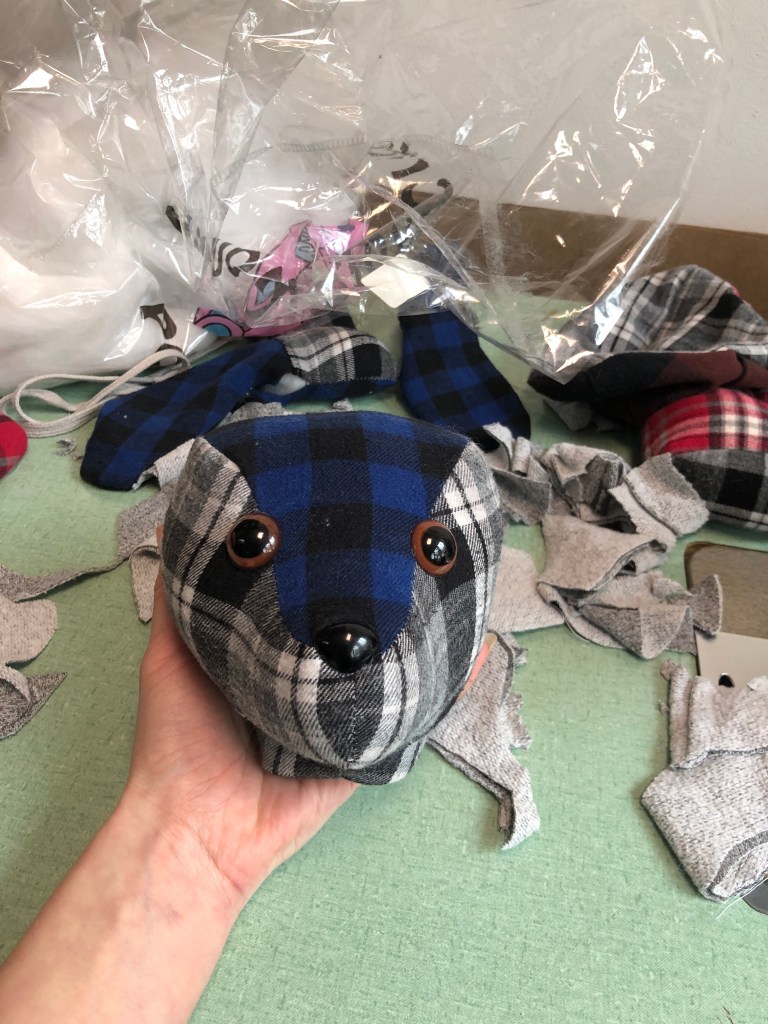
As I embarked on creating my prototype bear, I was filled with excitement. But it wasn’t until I held its little head in my hands, just after adding the eyes and nose, that my heart truly melted. There’s something magical about that moment when a teddy bear comes to life – it’s not just eyes and a nose; it’s the culmination of all the individual elements coming together to create a cherished companion.
During the final stages of my thesis, a personal tragedy struck when the sibling of an acquaintance passed away unexpectedly. In the midst of grief, my friend contacted me. His brother’s partner was seeking to have a teddy bear made from his old clothing. I knew I was the perfect person for this profound task.
As I began to craft the prototype for this special bear, I reflected on the fact that despite my lifelong fascination with these beloved creatures, this was the first one I had ever constructed. I was eager to explore the exact moment when a teddy bear comes to life, transforming from a collection of disparate parts into a cherished companion imbued with sentimental value.

In the Spirit of Continuity
This journey of exploring the significance of transitional objects and the magic of cuteness in textiles isn’t confined to the past. It’s an ongoing quest to understand the profound connections we form with textiles, from the earliest moments of our lives to the present day.
As I reflect on my experiences and research, it becomes clear that textiles have a unique power to shape our emotions, our memories, and our connections. The significance of transitional objects like teddy bears remains a powerful reminder of our capacity to create enduring bonds with inanimate objects, anchoring our past to our present.
This exploration of cuteness and textiles isn’t just about personal connection, it’s also a call to action. It’s a reminder that our relationship with textiles is a journey that can lead to a more sustainable and emotionally enriched future. In the previous blog post, I delved into how the concept of cuteness can be woven into sustainable fashion, encouraging us to cherish and care for our clothing, ultimately reducing our environmental footprint.
In essence, textiles are more than just fabric and threads; they are a bridge that connects us to our past, shapes our present, and inspires a more sustainable and emotionally driven future. So, let’s continue this journey together, exploring the emotional tapestry that textiles weave in our lives, and the role they play in fostering deeper connections with ourselves and our surroundings.
If you have a story of a precious textile object or an experience with a transitional object you ever were or still are affectionate about I would love to hear from you.

 Stephanie Ostler
Leave a comment